The Future of Architectural Visualization: Real-Time Rendering and Beyond

The Future of Architectural Visualization: Real-Time Rendering and Beyond

I work in the field of architectural visualization (archviz), so I have direct experience with how quickly it is developing. With evolving technology changing how we generate and interact with architectural representations, this is an exciting time to be involved. Two programs that have really improved my process are D5 Renderer and Lumion. This article examines how real-time rendering and other advances may impact archviz in the future and how these tools will fit into this changing environment.


Embracing Rendering in Real Time
The emergence of real-time rendering in archviz is one of the biggest developments. We can now see changes instantaneously thanks to technology, which makes the design process more engaging and effective. By delivering instantaneous visual feedback, real-time rendering not only expedites production but also improves cooperation with stakeholders and clients.

Lumion

In this sense, Lumion has changed everything for me. Its ability to render in real time has completely changed the way I approach tasks. I can easily apply adjustments, modify materials, and fine-tune lighting with Lumion and see the results in real time. Because of this immediacy, customers can engage with and explore their future spaces as they develop, allowing for more dynamic design revisions and an engaging experience overall.

Advanced Render Engines' Functions
Render engine advancements are another intriguing development in architectural visualization. With more realistic and intricate material and lighting simulations, these technologies are getting more and more advanced.

D5 Renderer

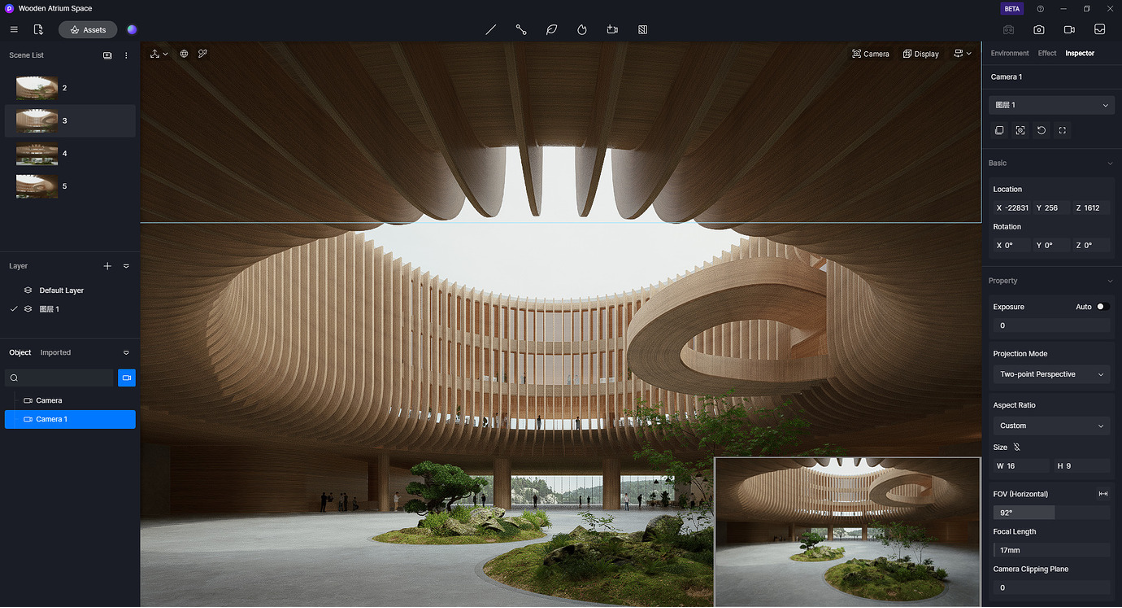
One excellent illustration of how these developments is expanding the realm of what is feasible is D5 Renderer. With its sophisticated engine, it is possible to create renderings that are incredibly realistic and detailed, with elaborate textures and lighting effects. D5 Renderer is a great tool for creating high-quality images that remarkably accurately convey the spirit of a design. My renders now have a deeper degree of detail thanks to the ability to mimic different lighting conditions and material qualities.

Combining Machine Learning and AI
Additionally, machine learning and artificial intelligence (AI) are having an impact on architectural visualization. These technological advancements are increasing realism, simplifying tasks, and opening up new creative possibilities. Artificial intelligence (AI)-powered technologies may produce realistic textures and materials, automate tedious operations, and even make design suggestions.

I have begun experimenting with AI technologies in my workflow in an effort to increase my productivity. For example, I have been able to save time and concentrate more on the creative aspects of my work by employing AI to develop procedural content or optimize textures. I think the way we approach visualization will shift even more profoundly as these technologies advance.

Augmented and Virtual Reality
The integration of Virtual Reality (VR) and Augmented Reality (AR) in architecture visualization is growing. These immersive technologies give customers new ways to interact and experience their creations. While AR may superimpose digital information onto physical places to provide a new view on how designs will fit into their real-world setting, VR enables fully immersive walkthroughs.

VR has potential, even though I haven't fully included it into my workflow yet. I've seen this in a number of projects. It's really wonderful to be able to provide clients with a totally immersive experience, and I can't wait to see how it might improve my presentations going forward.

Workflow Integration's Future
Anticipating the future, I think there will be even more technological integration in architectural visualization. More dynamic and engaging experiences will be produced by the seamless fusion of AI, sophisticated render engines, real-time rendering, and immersive technologies.

In my opinion, this evolution is already much aided by programs like Lumion and D5 Renderer. They match new trends in the market and improve the caliber and efficiency of my work. I'm interested to watch how these technologies develop further and how they will change how we communicate and depict architectural concepts.

The future of architectural visualization is brimming with possibilities, driven by innovations in real-time rendering, advanced render engines, AI, and immersive technologies. As I continue to explore and integrate these advancements into my workflow, I’m excited about the new opportunities they present for enhancing realism, efficiency, and client engagement. Tools like Lumion and D5 Renderer have already proven to be invaluable in this journey, and I look forward to seeing how they—and the industry as a whole—will continue to evolve.

https://www.linkedin.com/in/jaskaran-singh-804638262/

https://www.behance.net/jaskaransingh1

 Tags:

  • Real-Time Rendering
  • Architectural Visualization
  • Future of Archviz
  • Lumion
  • D5 Renderer
  • Advanced Render Engines
  • AI in Archviz
  • Virtual Reality in Architecture
  • Augmented Reality for Design.
  • Comments

    Popular posts from this blog

    The Power of Architectural Visualization: Bringing Designs to Life

    The Role of Artificial Intelligence in Architectural Visualization

    Storytelling Through Visualization: How to Convey a Narrative in Your Designs